what are you looking for?

Designing and deploying an optimized Solar Power System involves navigating complex decisions across system topologies, equipment sizing, battery pairing, and long-term maintenance. This comprehensive technical guide aggregates core answers to the most critical engineering questions—empowering installers, EPCs, and asset owners to maximize energy yield, system safety, and overall return on investment.
Key operational considerations when selecting system configurations and grid connectivity:
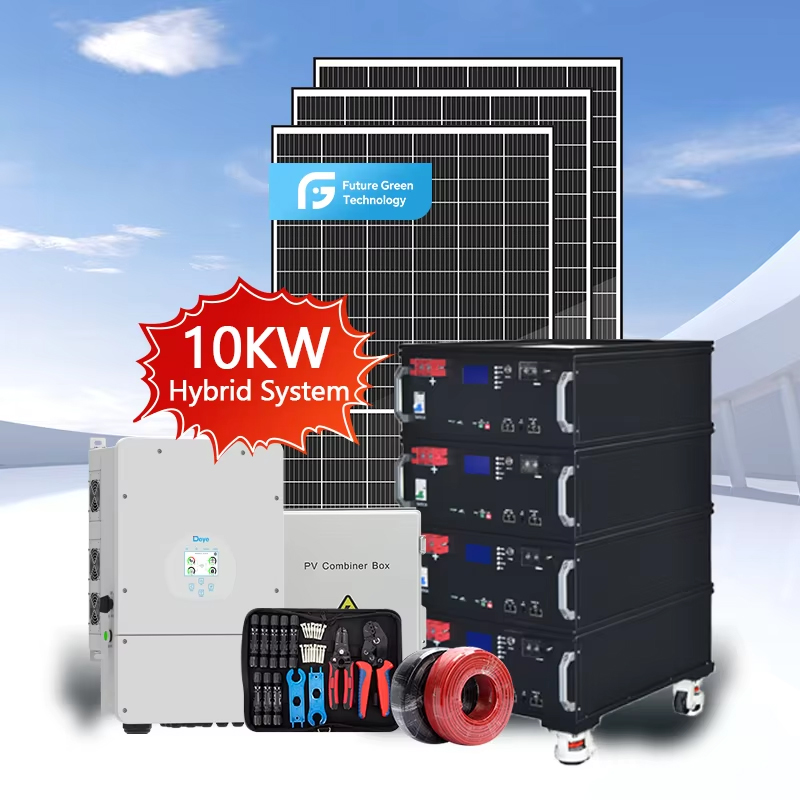
On-Grid exports excess power to the grid; Off-Grid operates independently using full battery storage; Hybrid systems intelligently combine grid access, solar yield, and battery backup for seamless TOU arbitrage and emergency power.
MPPT (Maximum Power Point Tracking) dynamically adjusts voltage to harvest up to 30% more energy than PWM (Pulse Width Modulation), making MPPT the essential standard for modern high-voltage solar arrays.
Lithium Iron Phosphate ($\text{LiFePO}_4$) offers $6000+$ deep cycles ($80\%$ DoD), higher round-trip efficiency ($\ge 95\%$), zero maintenance, and lightweight modularity compared to heavy, short-lived lead-acid batteries.
| Feature / Parameter | On-Grid Solar System | Off-Grid Solar System | Hybrid Storage System |
|---|---|---|---|
| Grid Dependency | Mandatory (Shuts down during blackout) | Zero (Independent) | Optional (Flexible operation) |
| Battery Requirement | Not required | Mandatory (High capacity) | Included ($\text{LiFePO}_4$ optimized) |
| Initial CAPEX Cost | Lowest upfront CAPEX | Moderate to High | Higher upfront; highest long-term ROI |
| Emergency Backup Power | No backup protection | Continuous power supply | Instant switchover (<10ms) |
Accurately sizing PV array wattage, battery storage reserves, and inverter ratings prevents system underperformance and blackout risks:
Always base PV sizing calculations on regional Peak Sun Hours ($1000\,\text{W/m}^2$ equivalent radiation), not total daytime hours, to prevent severe winter energy deficits.
Solar panels lose voltage as operational temperatures rise. Calculate open-circuit voltage ($V_{oc}$) using local minimum winter temperatures to ensure inverter protection limits are met.

 Monday -Sunday: 8:00 - 24:00
 No.13 Shang Zhen East RD., Taihe Town Baiyun Area, Guangzhou China
 info@futuregreenbattery.com